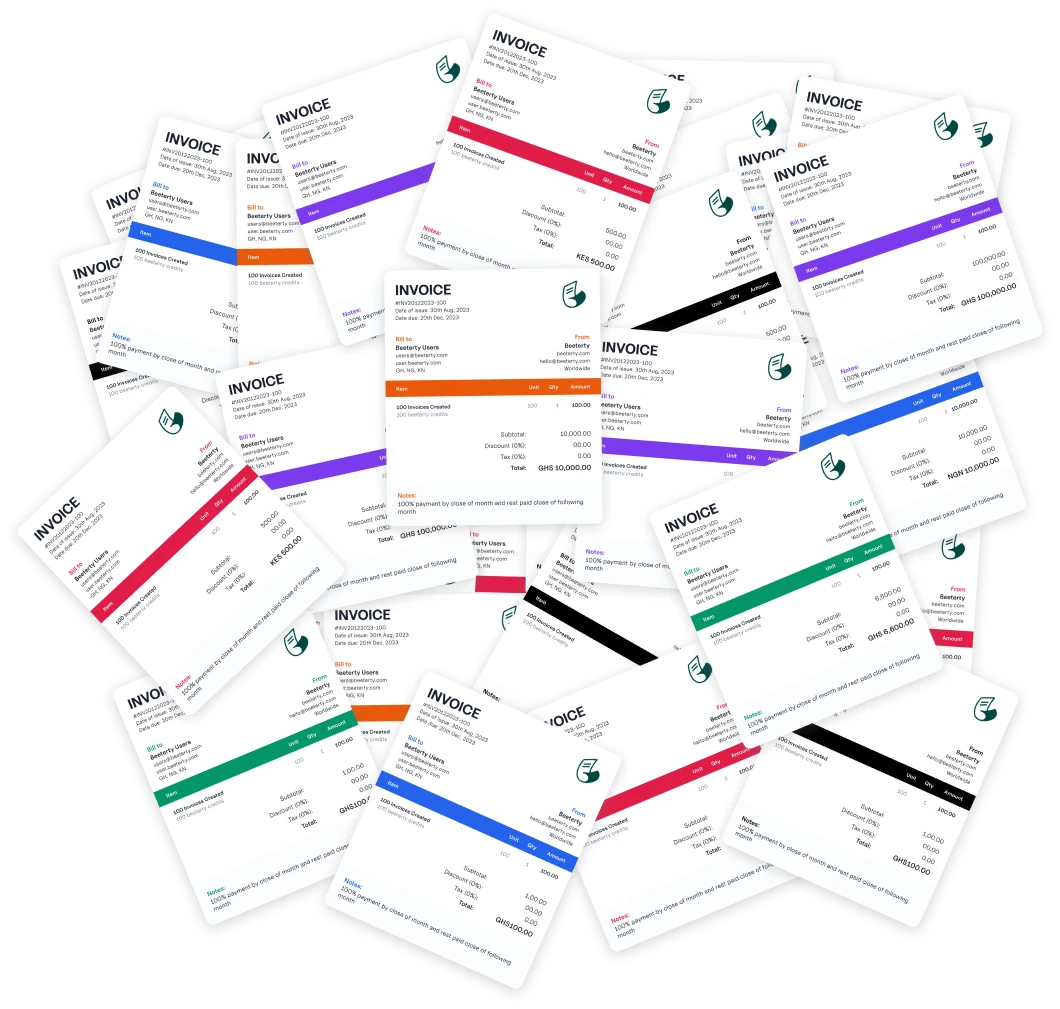
Invoice vs Receipt: What's the Difference (And Why You Need Both)
An invoice asks for money. A receipt confirms it arrived. Here's the difference between the two, what each one must contain, and why sending only invoices leaves you exposed.
A client messages you eight months after a job. "I'm pretty sure we settled that one already."
You think they did too. You remember the money landing. But you cannot find the transfer, they cannot find theirs, and neither of you kept anything that says the invoice was closed. Now you are either chasing money you already received, or writing off money you never did.
This is the situation receipts exist to prevent. And it is the single most common gap in how freelancers and small businesses handle paperwork, because most people send invoices diligently and then stop.
The Simple Distinction
An invoice is a request. A receipt is a confirmation.
The invoice comes first. It says: here is what I delivered, here is what it costs, here is when payment is due, here is how to pay me. It creates an obligation.
The receipt comes second. It says: payment of this amount was received on this date against this invoice. It discharges the obligation.
One looks forward at money you are owed. The other looks backward at money you got.
| Invoice | Receipt | |
|---|---|---|
| Sent | Before payment | After payment |
| Purpose | Requests payment | Confirms payment |
| Answers | What do you owe me? | Did you pay me? |
| Protects | Your right to be paid | You in a dispute |
| Shows | Amount due, due date | Amount paid, date paid |
What an Invoice Must Contain
- Your business name and contact details
- The client's name and details
- A unique invoice number
- The issue date and the due date
- Itemised line items describing what you delivered
- Subtotal, any tax, and the total due
- How to pay you
- Payment terms, including any late fee
We covered this in detail in The Complete Invoice Checklist.
What a Receipt Must Contain
A receipt is shorter, but the specifics matter:
- A unique receipt number
- The invoice number it settles. This is the field people forget, and it is the one that makes a receipt useful
- The date payment was received
- The amount actually paid
- The payment method: mobile money, bank transfer, cash, or cheque
- Any remaining balance, if it was a part payment
That last one matters more than people expect. If a client pays GH₵ 1,000 against a GH₵ 2,800 invoice, a receipt that only says "GH₵ 1,000 received" is nearly useless six months later. A receipt that says "GH₵ 1,000 received against invoice #0042, balance outstanding GH₵ 1,800" settles the argument before it starts.
Why Skipping Receipts Costs You
Disputes become your word against theirs. Without a receipt, the only record of payment is a bank line item, and bank statements do not say what the money was for. A GH₵ 2,000 transfer could have been for any of the four jobs you did that quarter.
Part payments turn into confusion. Deposits and instalments are normal. Without receipts tracking each one against an invoice, working out the outstanding balance becomes archaeology.
Your bookkeeping falls apart at tax time. Invoices tell you what you billed. Receipts tell you what you actually collected. Those are different numbers, and only one of them is income.
Clients ask for them and you look unprepared. Any client with a real finance function will need a receipt to close out their side. Being unable to produce one signals that your operation is informal, right at the moment you want to look established.
"I'll Just Send a WhatsApp Message"
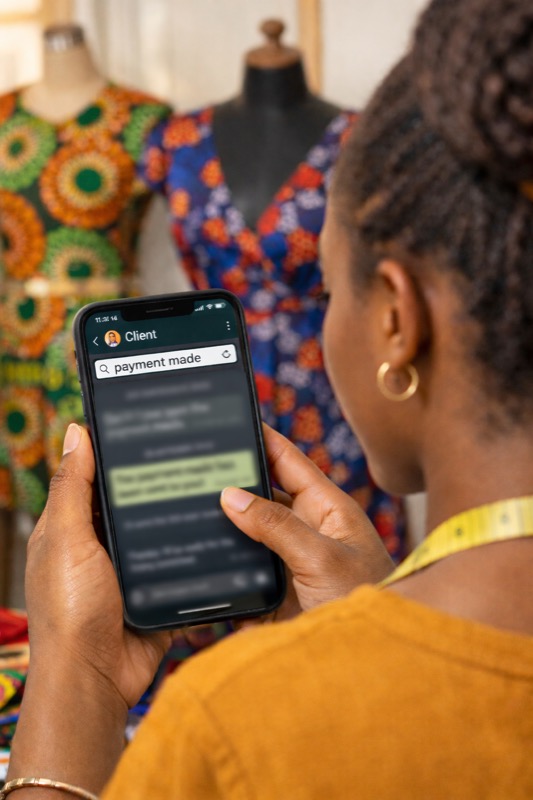
A screenshot of a mobile money confirmation is better than nothing. It is not a receipt.
It does not carry your business name, it does not reference the invoice, it does not state a balance, and it lives in a chat thread that will be buried within a week. If a dispute reaches anyone official, a chat screenshot is weak evidence. A numbered receipt on your letterhead is not.
The gap between these two is about ninety seconds of effort, and it only shows up as a problem months later, which is exactly why people skip it.
Make the Receipt Automatic
The honest reason most people do not send receipts is not that they disagree with any of this. It is that the money arrives, they are already onto the next job, and the paperwork never happens.
So take the decision out of it. In Beeterty, when you record a payment against an invoice, the receipt is generated automatically, numbered, linked to the invoice, and showing the amount paid and any balance left. There is no second document to remember, because remembering is the part that fails.
The Short Version
- An invoice requests payment. A receipt confirms it. You need both
- Always reference the invoice number on the receipt. It is what makes it provable
- Record part payments and the remaining balance, not just the amount received
- A chat screenshot is not a receipt and will not hold up in a dispute
- Automate it so it happens when you are busy, which is always
Invoices are how you get paid. Receipts are how you prove you were. Sending one without the other leaves half the job undone.
Related Articles
Guides
How to Give Your Accountant Access to Your Invoices (Without Handing Over Everything)
Sharing your login is the wrong answer. Here's how to give an accountant, assistant, or business partner exactly the access they need using roles and permissions, and what each person should actually be able to see.
Guides
7 Invoicing Mistakes New Freelancers Make (And How to Avoid Them)
Starting out as a freelancer? Avoid these common invoicing mistakes that cost you money, credibility, and clients. Practical tips for freelancers in Ghana and Africa.
Guides
The Complete Invoice Checklist: What Every Invoice Needs
Missing key details on your invoice can delay payments or cost you money. Here's a complete checklist of everything your invoice should include, with examples for freelancers in Ghana and Africa.