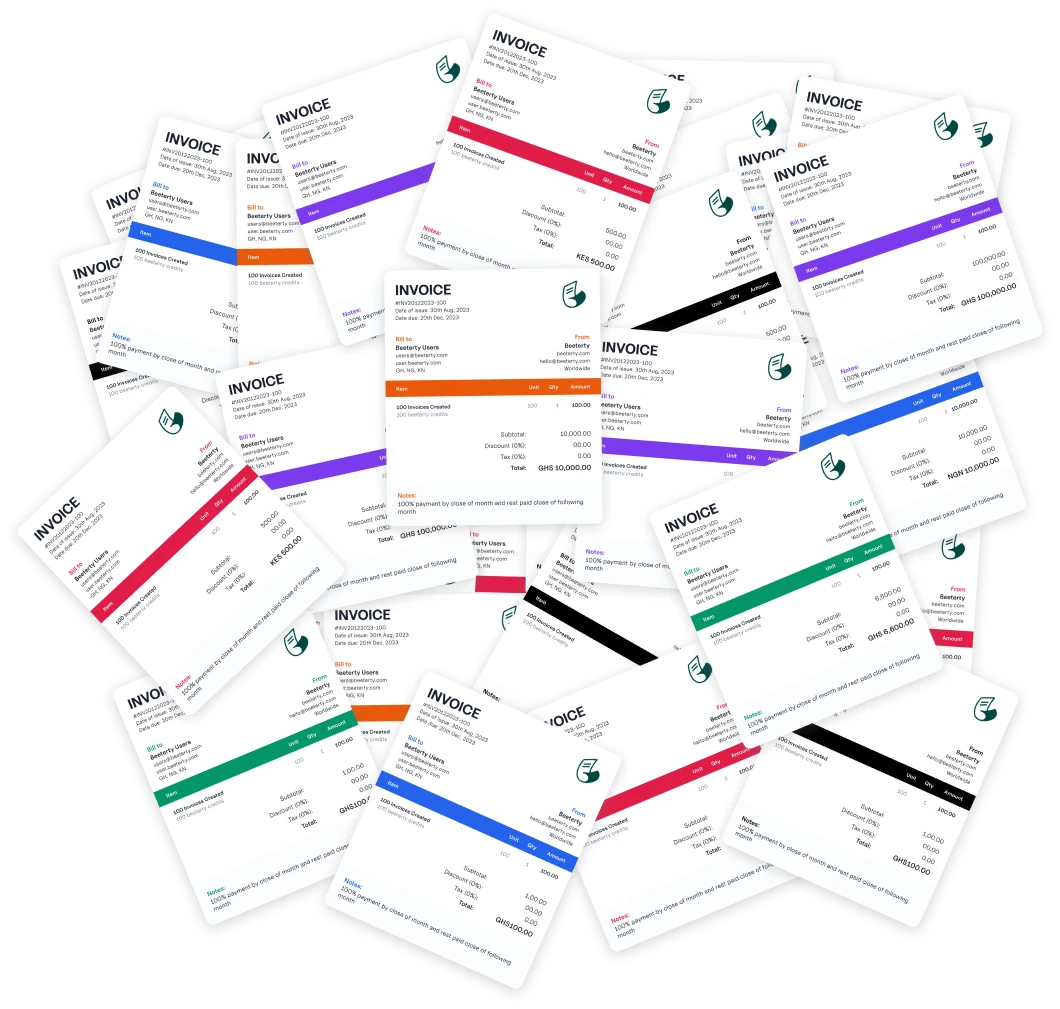
How to Create a Professional Invoice as a Freelancer in Africa
Learn how to create professional invoices that protect your income, impress clients, and help you get paid faster as a freelancer in Ghana, Nigeria, or anywhere in Africa.

Last year, a photographer friend in Kumasi told me he'd been owed GH₵ 4,500 for three months. He'd delivered the work, the client said they loved it, and then... nothing. When I asked him for a copy of the invoice he sent, he pulled out his phone and showed me a WhatsApp message: "Please send GH₵4,500 for the wedding shoot to MTN MoMo 024XXXXXXX."
That was his invoice. A chat message.
No breakdown of what the money covered. No due date. No record the client couldn't just scroll past and ignore. He'd basically asked for a favour instead of billing for a service.
If this sounds familiar, keep reading. I'm going to walk you through how to create a proper invoice that gets you taken seriously and gets you paid.
Why a Professional Invoice Changes Everything
Put yourself in your client's shoes for a second. They hire two freelancers for separate jobs. One sends a polished invoice with their business name, a clear breakdown of services, and a payment deadline. The other sends a text with a MoMo number.
Which one gets paid first? Which one looks like a real business?
Professional invoices do three things for you. First, they make you look established, even if you started freelancing last month. Second, they give you legal protection if a client disputes what was agreed. Third, they create a paper trail you'll need when tax season arrives.
An invoice isn't just a request for money. It's a receipt, a contract summary, and a payment reminder all rolled into one document.
What Every Invoice Needs to Include
Here's the complete breakdown.
Your business details. Your name or business name, phone number, email, and address. Even if you work from your living room, include a location. Clients trust businesses they can locate.
Client details. Their name or company name and contact info. Triple check the spelling. Getting a company name wrong on an invoice is a fast way to look careless.
A unique invoice number. Start at INV-001 and go up from there. Sequential numbering keeps you organised and makes you look like you've been doing this for years. Come tax season, you'll be grateful.
Issue date and due date. The day you're sending the invoice and the day you expect payment. Be specific. "Payment due within 7 days" works. "Please pay when you can" does not.
An itemised list of services. This is where most freelancers get lazy. Don't write "Design work: GH₵ 2,000." Break it down: "Logo design: GH₵ 800. Business card layout: GH₵ 600. Social media templates (5): GH₵ 600." Clients respect transparency. It also makes it harder for anyone to claim they didn't agree to the amount.
The total amount due. Big, bold, impossible to miss. Always include the currency. GH₵, NGN, KES, USD, whatever you agreed on.
Payment instructions. Your bank account details, mobile money number, or whatever method you accept. I once gave a wrong account number on an invoice and spent three weeks chasing a payment that was sitting in a stranger's bank account. Double check everything.
Creating Your Invoice Step by Step
Pick your method
You've got a few options here.
Word or Google Docs. Free and easy to start with, but you'll burn time on formatting every single invoice. Columns break. Logos shift. It works until it doesn't.
Spreadsheets. Better for doing the maths, but you still have to save, name, and organise every file manually.
Invoice software. Tools like Beeterty handle the layout, numbering, and record keeping for you. You fill in the details, the software does the rest. If you're sending more than a couple of invoices a month, this pays for itself in saved time.
Add your branding
Your invoice represents your business. Add your logo. Pick colours that match your brand. Keep it clean and readable. Even something small like a header with your business name and a consistent font makes a real difference.
Get the details right
This is where careless mistakes cost you weeks of follow up.
- Client name exactly as it appears in your communications
- Services matching what was agreed in your proposal
- Amounts checked twice (better yet, three times)
- Payment details tested and verified
Set clear payment terms
Don't dance around when you expect to be paid. Common terms include:
- Due upon receipt (for small, quick jobs)
- Net 7 (payment within 7 days)
- Net 14 or Net 30 (for bigger projects or corporate clients)
State which payment methods you accept. Bank transfer, mobile money, card. The more options you give, the fewer excuses a client has to delay.
Add a late payment note
You don't have to be aggressive about it, but protecting yourself is professional, not rude. A line like "A 5% late fee applies after the due date" sets expectations upfront. Most clients won't push back on something that was stated clearly from the start.

Mistakes That Will Cost You Money
Here are the ones I see constantly.
Being vague about deliverables. "Consulting: GH₵ 5,000" tells the client nothing. When they can't remember what that covers, they'll stall on payment.
Skipping invoice numbers. Without them, you can't track what's paid and what's outstanding. It also looks unprofessional when a client asks about a previous invoice and you have to dig through your email.
Not following up. Send a polite reminder the day before the due date and another on the day itself. Most late payments aren't malicious. People are busy. They forget. A gentle nudge usually does the job.
Accepting only one payment method. If your client uses MTN MoMo and you only accept bank transfers, you're creating friction. Offer options.
Not saving copies of your invoices. Always keep records. You'll need them for taxes, for repeat clients, and for the inevitable "What did I pay you last time?" conversation.
Make It a Habit
Invoicing isn't the exciting part of freelancing. Nobody got into photography or graphic design or consulting because they love paperwork. But getting paid is what keeps you doing the work you actually enjoy.
Whatever tool you use, the key is consistency. Invoice every client, every time, with the same level of detail and professionalism. That's how you go from "person who does freelance work" to "business owner who gets paid on time."
Go Get Your Money
Creating professional invoices isn't about being difficult. It's about respecting your own work enough to document it properly. You're running a business. Act like it.
Start with your next project. Before you send the final deliverable, send the invoice. Use every element we covered. You'll notice a difference in how quickly clients respond when everything looks like it came from someone who knows what they're doing.
If you're done with the formatting headaches and want to send your first professional invoice in under two minutes, try Beeterty. It's built for freelancers and small businesses in Africa who want to get paid faster without the stress.
Now go create that invoice and get your money.
Related Articles
Guides
How to Give Your Accountant Access to Your Invoices (Without Handing Over Everything)
Sharing your login is the wrong answer. Here's how to give an accountant, assistant, or business partner exactly the access they need using roles and permissions, and what each person should actually be able to see.
Guides
Invoice vs Receipt: What's the Difference (And Why You Need Both)
An invoice asks for money. A receipt confirms it arrived. Here's the difference between the two, what each one must contain, and why sending only invoices leaves you exposed.
Guides
7 Invoicing Mistakes New Freelancers Make (And How to Avoid Them)
Starting out as a freelancer? Avoid these common invoicing mistakes that cost you money, credibility, and clients. Practical tips for freelancers in Ghana and Africa.