Withholding Tax on Invoices in Ghana: What Freelancers Need to Know
Forgetting to account for withholding tax on your invoices in Ghana can cost you 5 to 7.5% on every payment. Here's how WHT works, how to gross up your invoice, and how to protect your money.

Picture this. You quote a client GHS 1,000 for a project. You do the work, send the invoice, wait for the money. Then GHS 925 lands in your account. You check your banking app three times. Did they short you? Is there a bank charge you missed?
No. That's withholding tax. And if you didn't plan for it, you just lost 7.5% of your earnings without realising what happened.
This catches practically every freelancer in Ghana the first time it happens. I've talked to designers, consultants, developers, and photographers who all had the same confused reaction: "Where did the rest of my money go?"
Let me explain exactly what's going on so this never happens to you again.
What Is Withholding Tax, Really?
Withholding tax (WHT) is a prepayment of your income tax. When you invoice a registered business in Ghana, they're legally required to deduct a percentage of your payment and send it directly to the Ghana Revenue Authority (GRA) on your behalf.
Think of it as the government collecting their cut at the source instead of trusting you to pay it later.
The money isn't gone forever. It counts as a credit toward your annual income tax. But if you didn't build it into your pricing, you're effectively taking a pay cut on every single invoice.
What Are the Current WHT Rates in Ghana?
The rate depends on what you're selling:
- Services (consulting, freelancing, design, development): 7.5%
- Goods and supplies: 5%
- Commission: 10%
- Rent: 8%
- Professional services (law, accounting, engineering): 7.5%
If you're a freelance graphic designer, photographer, web developer, writer, or consultant, you fall into that 7.5% bracket. That means for every GHS 1,000 you invoice, GHS 75 gets deducted before you see a cedi.
The Maths of Getting It Wrong
Let's walk through two scenarios so you can see the difference clearly.
Scenario 1: You don't plan for WHT
You need GHS 1,000 for a project. You invoice GHS 1,000. The client deducts 7.5% (GHS 75) and pays you GHS 925.
You expected: GHS 1,000 You received: GHS 925 You lost: GHS 75
Now multiply that by every invoice you send in a year. If you invoice GHS 50,000 annually, that's GHS 3,750 you planned to have but never received. That's rent money. That's equipment. That's a holiday you could have taken.
Scenario 2: You plan for WHT by grossing up your invoice
You still need GHS 1,000. But this time, you calculate the gross amount:
GHS 1,000 / 0.925 = GHS 1,081.08
You invoice GHS 1,081.08. The client deducts 7.5% (GHS 81.08) and pays you GHS 1,000.
You expected: GHS 1,000 You received: GHS 1,000 You lost: Nothing
Same project, same effort, same client. The only difference is you did the maths properly.
How to Show WHT on Your Invoice
Your invoice should break this down clearly so both you and your client are on the same page.
Invoice #001
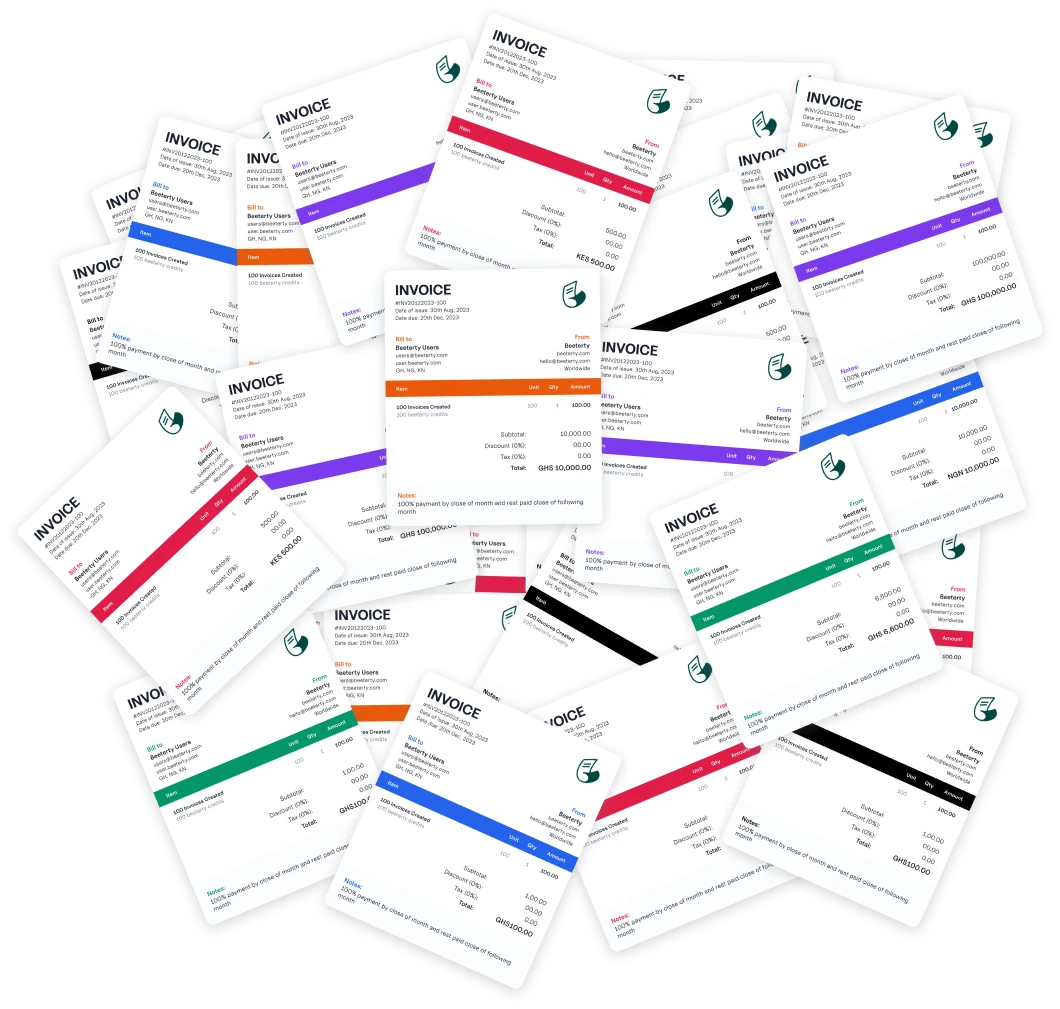
Service Description: Website Design Subtotal: GHS 1,081.08 Less: Withholding Tax (7.5%): GHS 81.08 Amount Due: GHS 1,000.00
This tells the client exactly what to pay you, what to withhold, and where it goes. No confusion. No back and forth. No surprises on either side.
One thing to watch out for: some clients will try to tell you they'll pay your quoted amount and then deduct WHT on top. If you quote GHS 1,000 and they deduct 7.5%, you end up with GHS 925. Always gross up first. The maths doesn't lie.
What Happens to the Withheld Money?
Good news: it's not gone permanently. That GHS 75 (or whatever was withheld) is a credit against your annual income tax. When you file your returns with GRA at the end of the year, you offset the withholding tax that was already paid on your behalf.
But there's a catch. You need proof.

Always Get Your WHT Certificate
After deducting withholding tax from your invoice, clients are legally required to file it with GRA and give you a Withholding Tax Certificate. This piece of paper (or PDF) is your proof that tax was already paid on that income.
Without it, GRA has no record that you already paid tax on that money. They might try to tax you again.
Here's what to do:
- Ask for the certificate within 30 days of receiving payment
- Keep every certificate in a folder (digital or physical)
- Submit them all when filing your annual tax return
If a client refuses to give you the certificate, pay attention. It might mean they pocketed the deduction and never actually filed it with GRA. Follow up. Don't let it slide.
If You're the One Paying a Freelancer
Quick note for those on the other side. If you hire a freelancer or contractor, the responsibility to deduct and file WHT sits with you. Here's what you need to do:
- Deduct WHT from their invoice at the correct rate
- File and pay it to GRA by the 15th of the following month
- Issue a WHT certificate to the freelancer
Miss any of these and you could face penalties. GRA doesn't give warnings.
Why We Built This Into Beeterty
This whole withholding tax problem is personal for us. We experienced it firsthand. We invoiced clients, got paid less than expected, scrambled for certificates, and realised that most invoicing tools weren't built with African tax realities in mind.
So when we built Beeterty, handling withholding tax properly was one of the first features we added. You toggle it on, set your rate, and Beeterty does the gross up calculation automatically. Your invoice shows the breakdown clearly, and you receive what you actually need.
No spreadsheet gymnastics. No surprises when the payment hits your account.
The Short Version
- Withholding tax is real and it will catch you if you don't plan for it
- Most freelance services are taxed at 7.5% in Ghana
- Gross up your invoice so the client deducts WHT and you still get your full amount
- Always request a WHT certificate from every client who deducts tax
- Use those certificates when filing your annual returns to claim credit
Forgetting about withholding tax is one of the most expensive mistakes freelancers make in Ghana. But now you know how it works and exactly how to protect yourself.
Ready to stop losing money on every invoice? Beeterty automatically handles withholding tax calculations so you always get paid what you're owed. Try it free today and see the difference on your next invoice.
Related Articles
Finance
Ghana's New VAT Rules in 2026: What Freelancers and Small Businesses Need to Know
The VAT Act 2025 (Act 1151) changed VAT in Ghana from 1 January 2026. Service providers must now register regardless of turnover, the rate structure is simpler, and the COVID levy is gone. Here is what it means for your invoices.
Guides
How to Give Your Accountant Access to Your Invoices (Without Handing Over Everything)
Sharing your login is the wrong answer. Here's how to give an accountant, assistant, or business partner exactly the access they need using roles and permissions, and what each person should actually be able to see.
Business
Choosing Invoicing Software as an African Freelancer: An Honest Comparison
Wave, Zoho, QuickBooks, or something built locally? A straight comparison of invoicing tools for freelancers and small businesses in Ghana and across Africa, including where each one falls short.